Kibbl AI-powered pet healthcare app
@Kibbl AI

Designing AI-powered nutrition care for pet owners, resulting in government startup funding
TEAM
1 Project Designer (ME)
1 Full-stack Engineer
1 AI Developer
1 In-house Vet
SKILL
Figma
Adobe Creative Cloud
TIMELINE
Jul - Aug, 2025 (8 weeks)
IMPACT
Awarded seed funding through a government-sponsored startup program
PROBLEM
The gap in access to professional veterinary nutrition care
Despite the importance of pet nutrition, most families in the U.S. cannot access professional veterinary guidance due to the scarcity of experts and high consultation costs.
As a result, pet owners are left to make critical health decisions with fragmented or unreliable information.

SOLUTION
Using AI to democratize veterinary-grade nutrition insights
Kibbl leverages AI to translate complex health data into personalized, actionable nutrition guidance—without requiring expensive consultations.
In this project, I led end-to-end product design, shaping how AI translates complex health data into tailored, actionable nutrition guidance.
Lowering the barrier to getting started
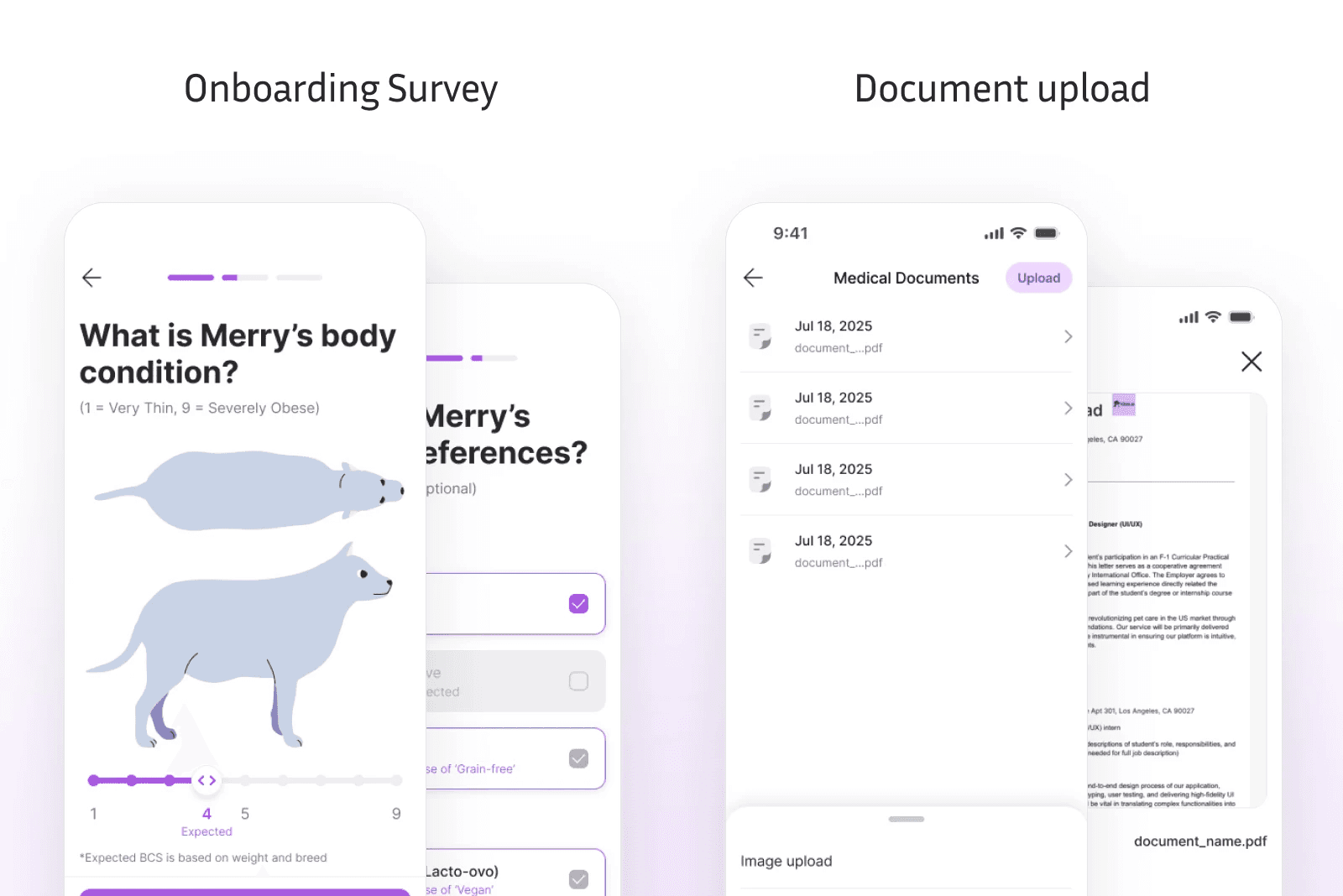
Users can log basic health information through a short survey or upload medical records.
Health dashboard for key health insights
With a high-level health summary, users can understand key insights at a glance and access a detailed view where test results are translated into meaningful disease context and connected to nutritional guidance.
Trend monitoring for proactive care
Users can continuously update health metrics and view changes over time.
Food recommendations tailored to health needs and preferences
Based on the pet’s health condition and preferences, users receive food recommendations that translate insights into an actionable nutrition plan.
IMPACT
Securing governmental seed funding
Kibbl AI was successfully launched as an MVP and secured governmental seed funding, validating both the business opportunity and the product direction.

TL;DR done. Let’s go deeper!
BUSINESS OPPORTUNITY
Professional nutrition care for pets is scarce and expensive
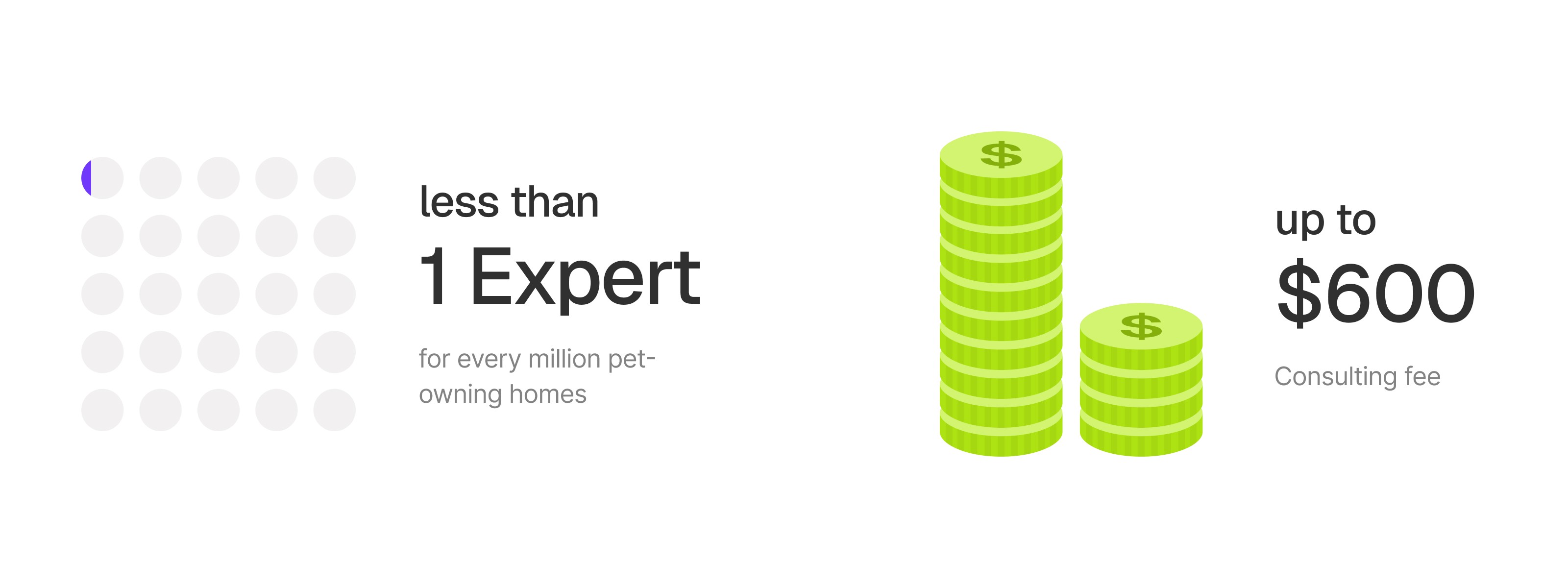
More than 70% of U.S. households own a pet, but there are fewer than 100 certified veterinary nutritionists nationwide. On top of that, nutrition consultations usually cost $200–$600, which is a heavy burden for many pet owners.
Lack of veterinary nutritionists & High cost of consulting
EXPERT INTERVIEW
What actually happens during a nutrition consultation and where it breaks down
To design responsibly in this space, I needed to understand not just that access is limited, but how nutrition guidance is currently delivered and where it falls short for pet owners.
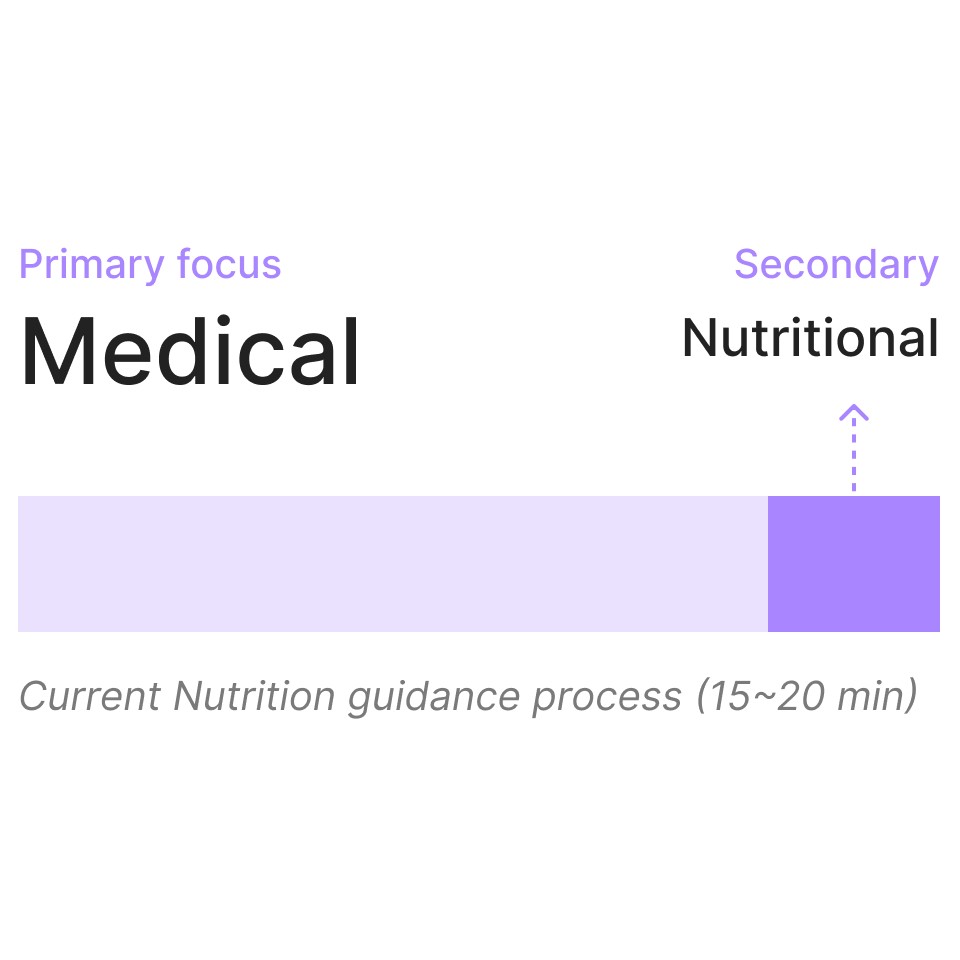
I interviewed a practicing veterinarian to ground this flow in real-world clinical settings, where nutrition is often addressed briefly within broader health visits.
1
Nutrition guidance is brief and secondary
2
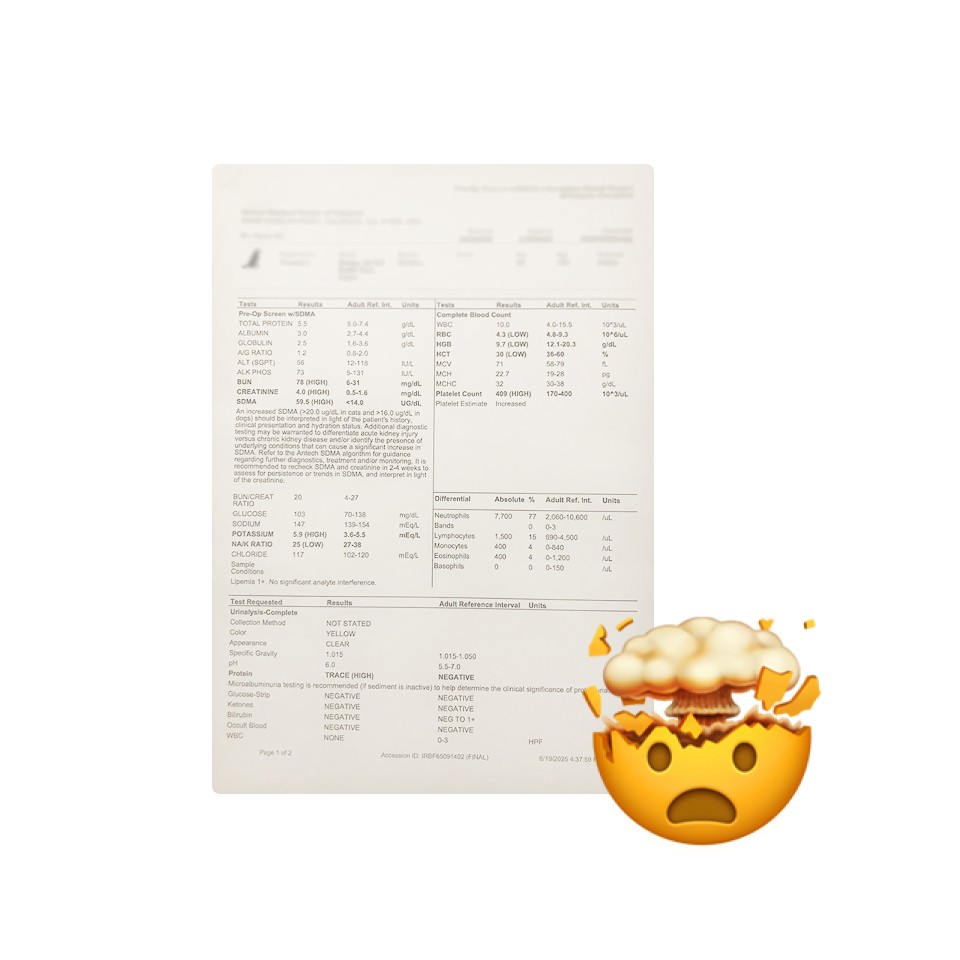
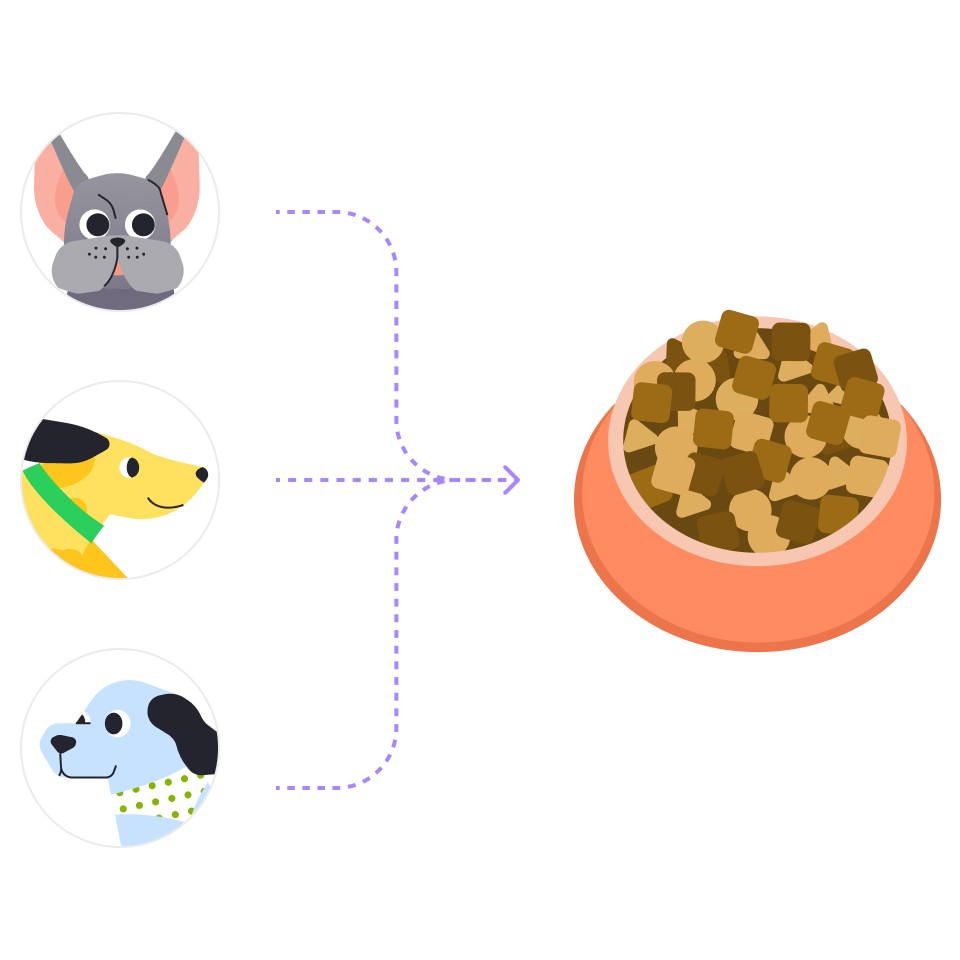
Information is hard to grasp—and even harder to act on
3
Recommendations are too general to feel personal

How might we help pet owners interpret complex health data and turn it into actionable nutrition decisions?
To answer this question, I looked beyond screens and focused on how nutrition consultations actually work.
UX FLOW & INITIAL DESIGN
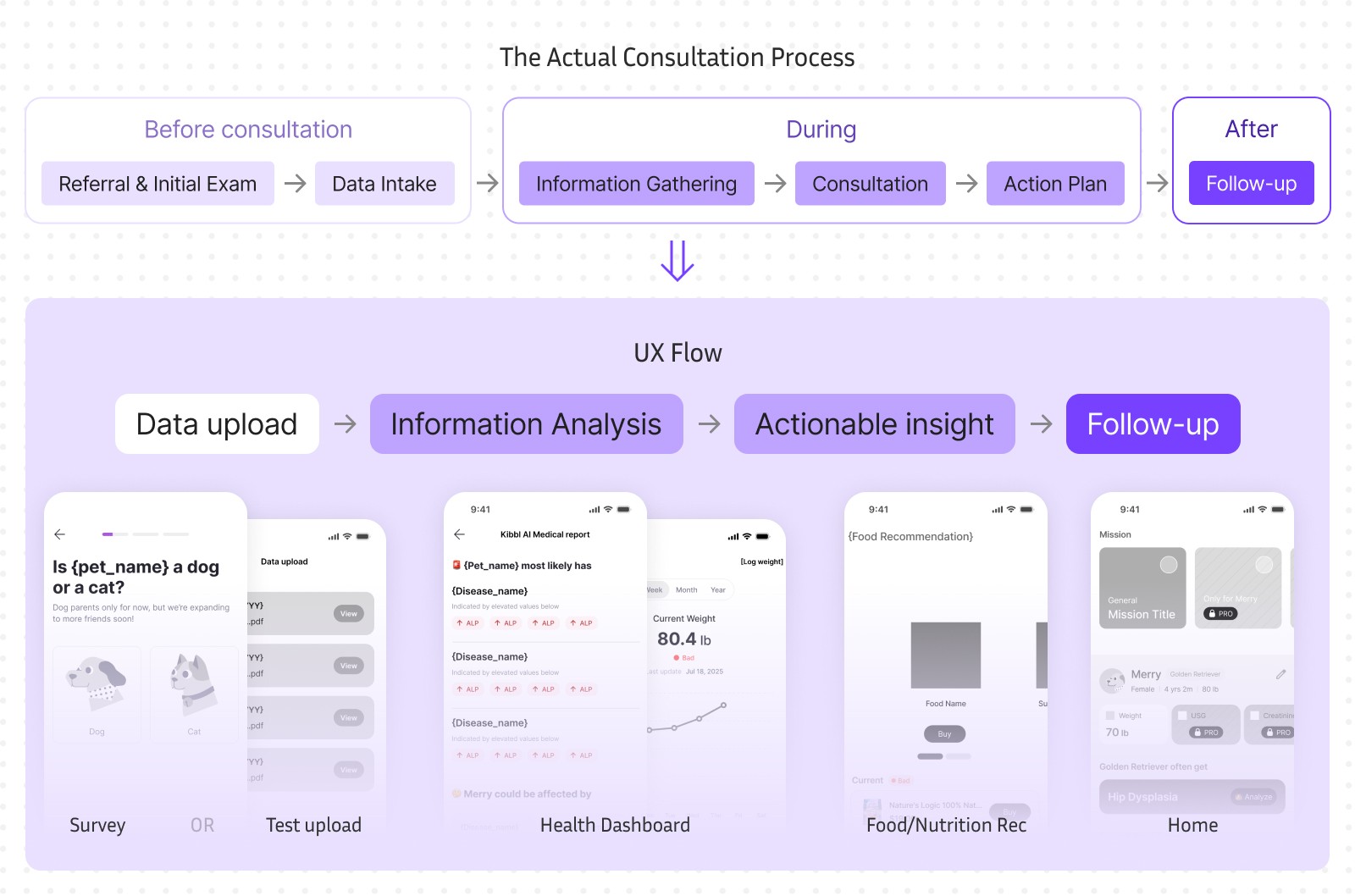
Translating consultation logic into a product experience
In a traditional consultation, experts gather health information, identify what matters most, explain why it matters, and guide pet owners toward next steps.
Rather than replicating each step of the consulting process, my goal was to translate this expert reasoning into a scalable product experience.
DESIGN BENCHMARKING
Learning from how people already read health data
With the consultation logic translated into a UX flow, the next challenge was designing the information layer—where users interpret health data and decide whether to trust it.
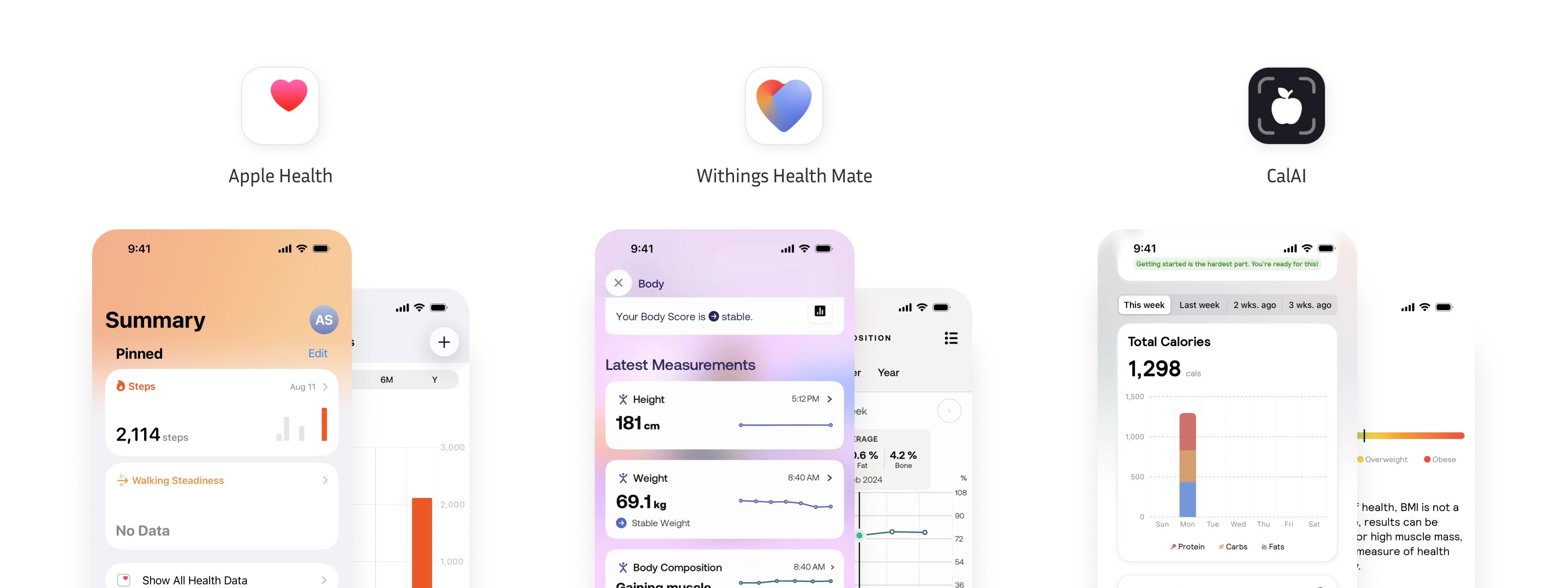
To ground these decisions, I reviewed existing health dashboards—both pet and human—to understand how users already read and make sense of health information.
Health apps to understand common ui patterns
Main Findings
1
Users rely on high-level summaries before exploring details
2
Historical data builds trust and context
3
Logging data supports ownership and continuity
These findings clarified what the dashboard needed to do first:
Help users understand why a certain insight appears before asking them to act on it.
DESIGN EXPLORATION
Designing a Cause-and-Effect Dashboard
I explored dashboard designs to connect potential health conditions with nutritional guidance, each framing the cause-and-effect relationship differently.
Displays top potential conditions based on test values

Translates current and potential conditions into nutritional guidelines
Shows key health metrics at a glance
ITERATION
Feedback from stakeholders
Due to time and resource constraints, direct access to pet owners was limited. Instead, I worked closely with an internal veterinarian and incorporated their feedback into the final design decisions.
Before
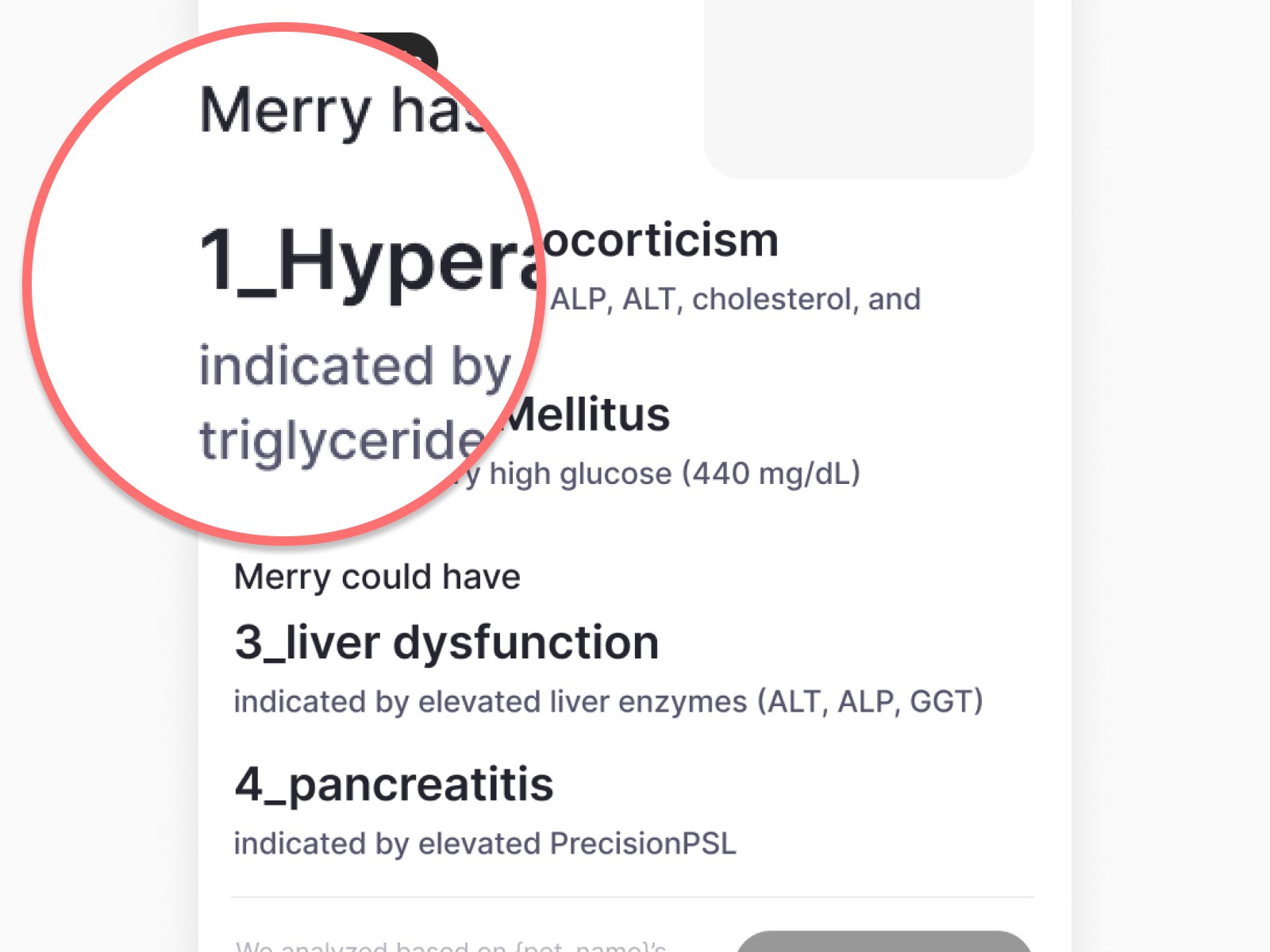
AI should not imply certainty in medical contexts
Because health data is incomplete and context-dependent, ranking diseases using AI risks creating a false sense of certainty.
Final Design
Surface possibilities without prioritization
Instead of ranking diseases, I revised the UI to present multiple possible conditions equally. By strengthening the section title, the design clearly reinforces AI’s role as a tool for interpretation.
Before
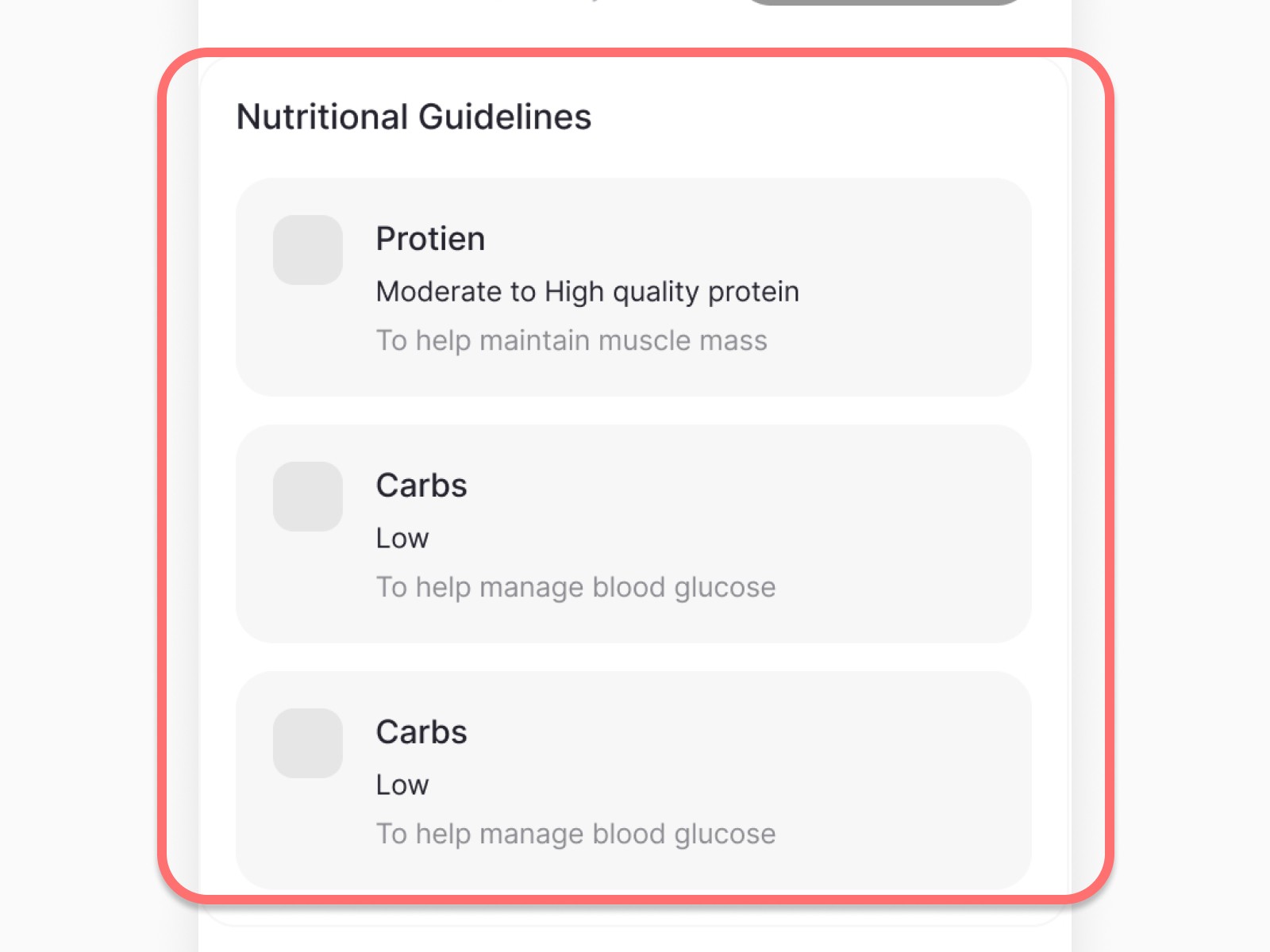
Lacks actionable nutritional insights
Nutritional information is presented at a high level, without clearly translating insights into concrete dietary actions.
Final Design
Added a navigation button to the Food Recommendation page
Instead of only informing users about potential conditions, the design now guides them to take the next step—acting on the insights by exploring and choosing food options.
Before
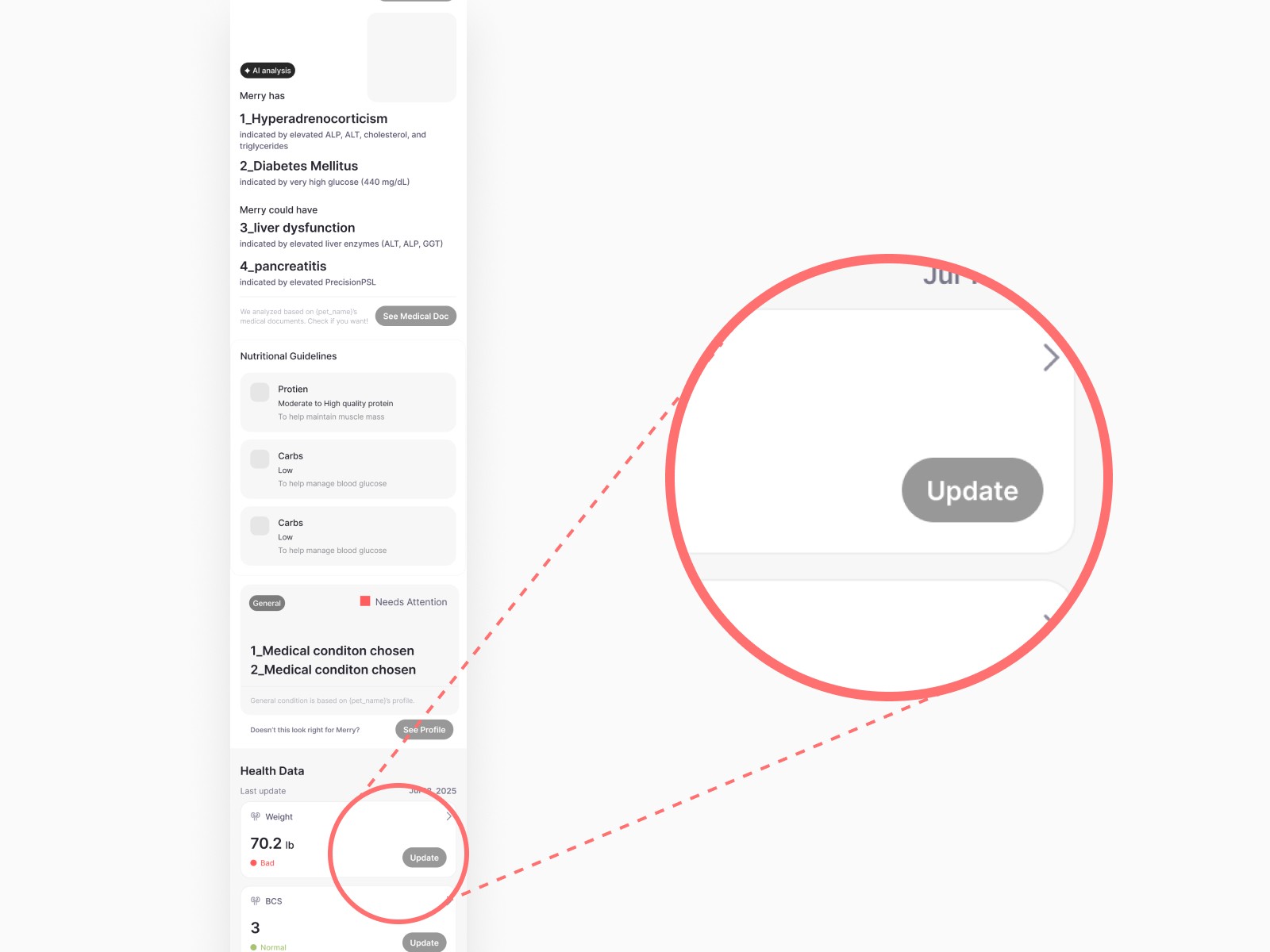
Follow-up is critical, but logging data is hard to access
As follow-up is critical, making consistent logging of key metrics. However, the current UI requires too much scrolling to reach the Health Data section.
Final Design
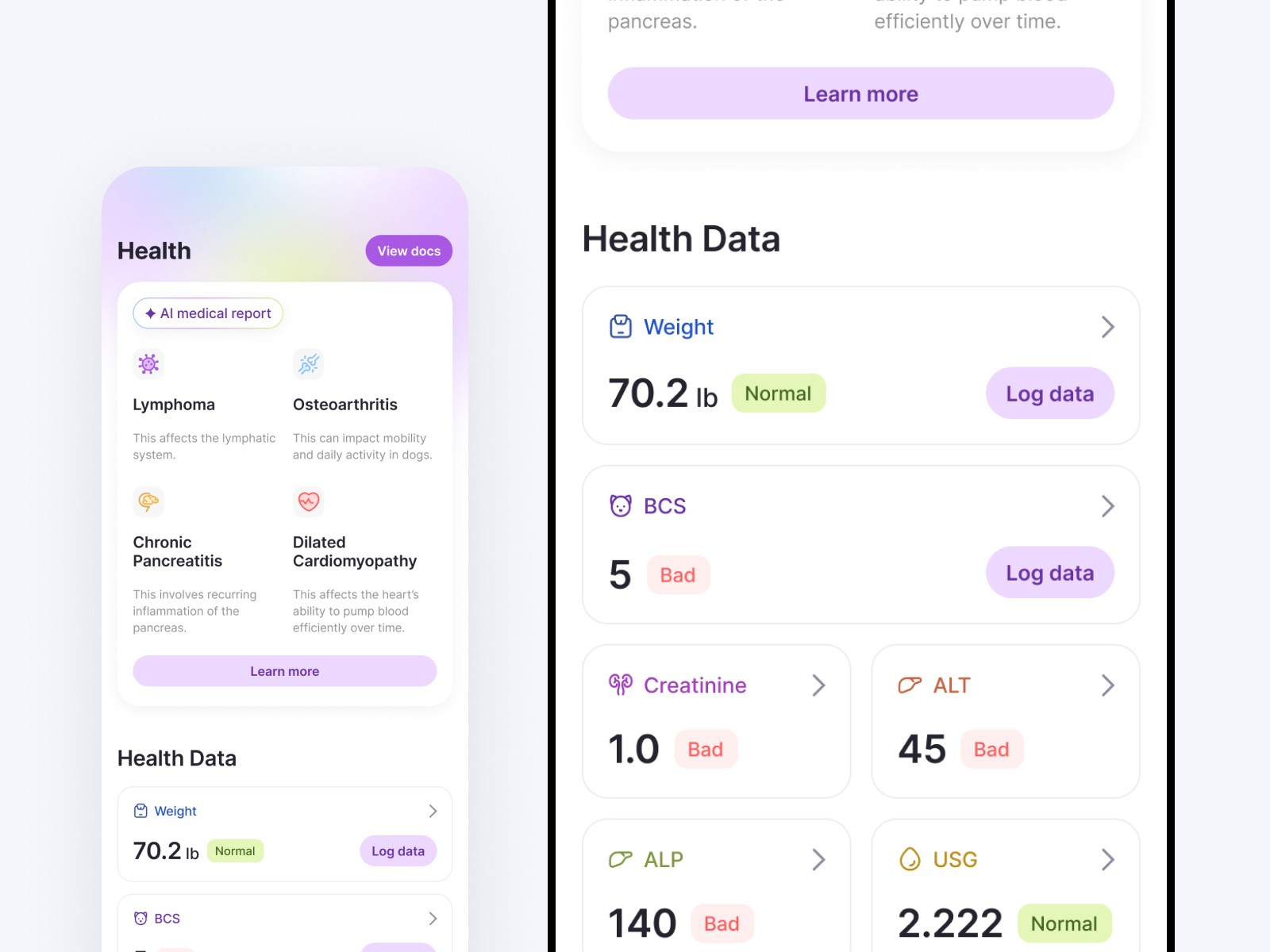
Reducing scrolling to support faster follow-up
To reduce scrolling friction during follow-up, I condensed disease information in the main view and surfaced health metrics earlier, with detailed explanations accessible in a separate detail view.
PROTOTYPE
Final Prototype
IMPACT
TAKEAWAY 1
Using AI requires careful consideration
Working closely with an internal veterinarian helped me understand where AI-driven insights must remain cautious and how design choices can unintentionally overstep medical boundaries.
TAKEAWAY 2
Good benchmarks aren’t always from the same domain
Although this product focused on pet health, studying human healthcare dashboards helped me learn how people interpret health information and how the information hierarchy can make complex data feel more approachable.
© Sejin Kim 2026. All rights reserved.